

What is Blood Flow
Restriction (BFR) Training?
Get heavy-lifting results — without heavy weights. Blood Flow Restriction (BFR) training uses light weights and snug bands to create a powerful internal signal to your muscles — without the weight that wears joints down. The result is real muscle growth without heavy weights, in workouts that are less than 20 minutes.
If that sounds like a contradiction, the science explains it. Once you understand how it works, it’s hard to argue with the results.
Understanding Blood Flow Restriction Training
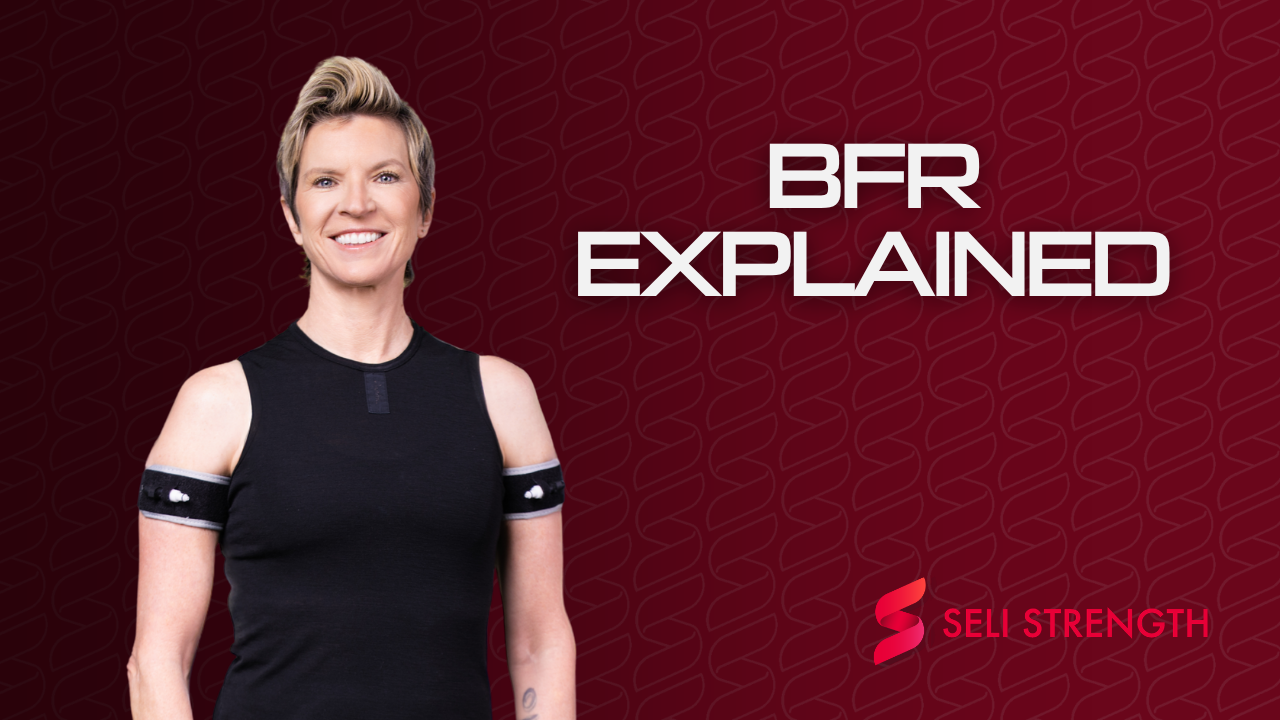
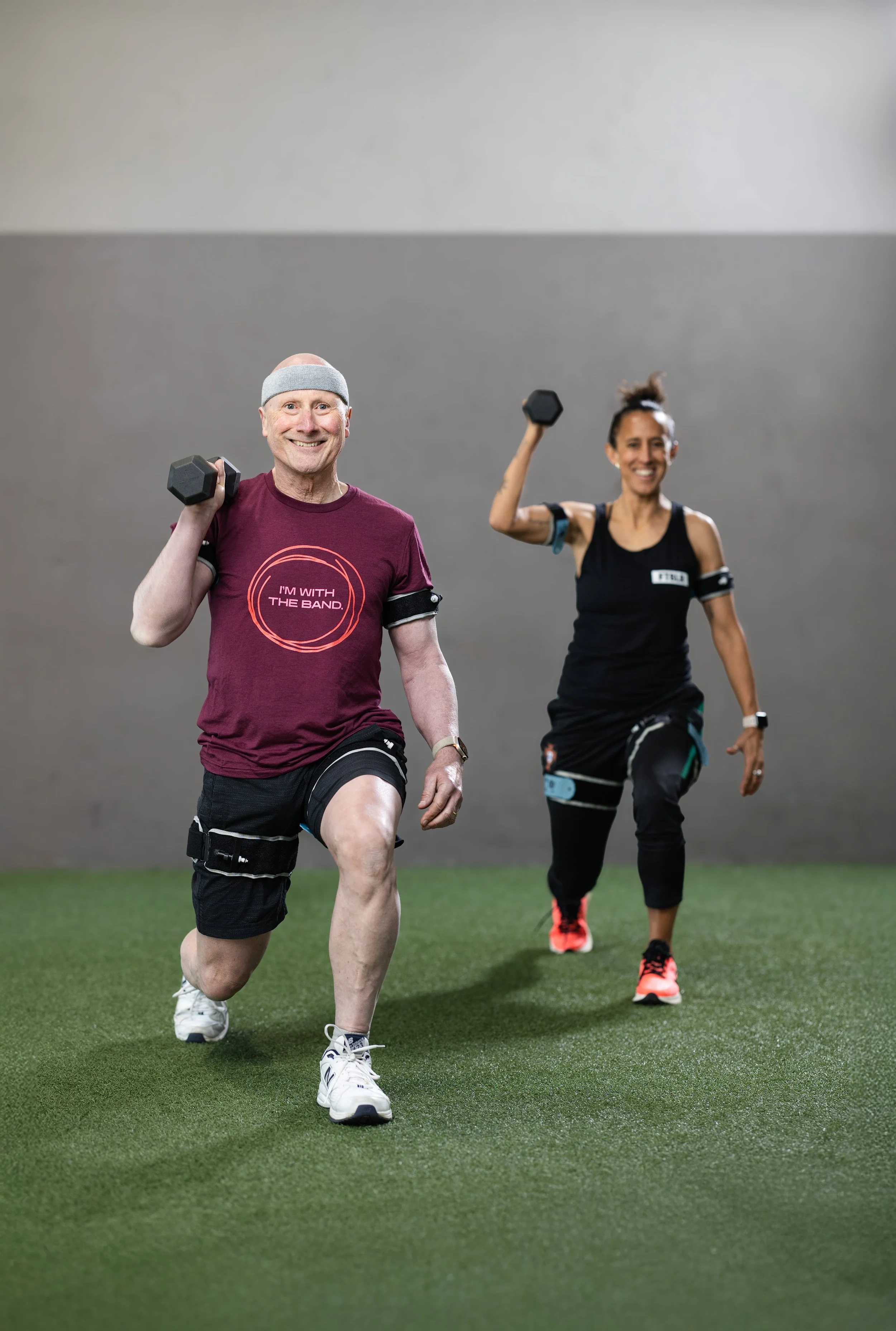
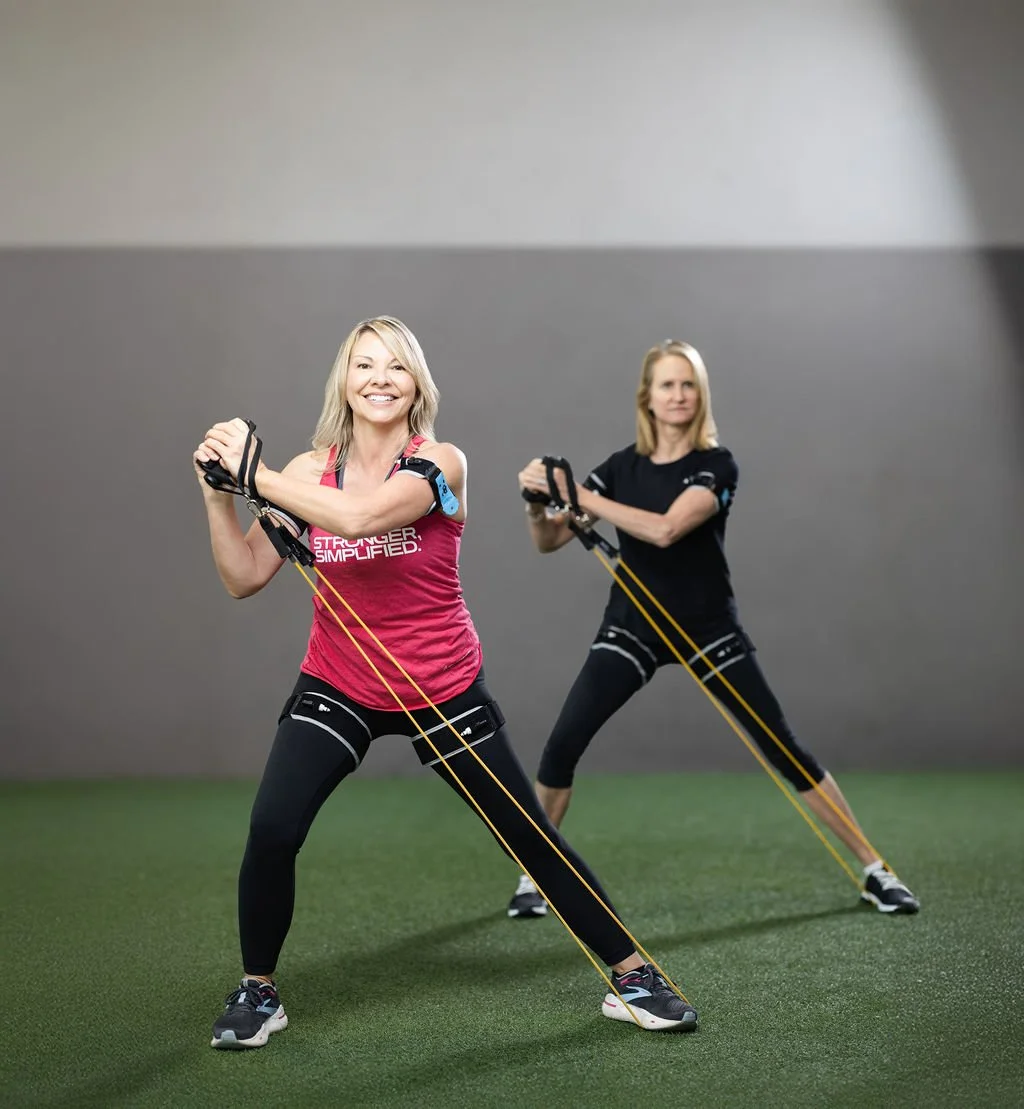
BFR training works by placing snug BFR bands on the upper arms and upper legs during exercise. The bands apply controlled, partial compression — enough to slow the blood leaving the muscles, but not enough to stop blood flow coming in.
That distinction matters. Blood continues to enter the working muscle. What changes is how quickly it leaves. That shift is what BFR is in practical terms — and what makes it work.
How Does BFR Work?
When BFR training partially restricts venous return, muscles work in a lower-oxygen environment. Fatigue accumulates faster than it would under normal conditions, and the body responds to that signal the same way it would to much heavier work.
Here’s what happens:
-
Fast-twitch muscle fibers activate at weights far lighter than traditional training requires. They’re responsible for muscle strength and size.
-
Lactic acid builds up, signaling the release of human growth hormone — a key driver of muscle building and recovery.
-
Muscles swell in response to BFR, triggering an increase in protein synthesis, which is key to building muscle.
-
Blood vessels adapt over time, lowering blood pressure, improving circulation and increasing cardiovascular capacity.
Your body responds to the signal, not the weight. That’s the whole idea.
What Does BFR Do for Muscle Growth?
BFR uses lighter weights for stronger results. That means you can build muscle without heavy weights. The science has been saying so for decades — BFR training produces the same muscle building gains as traditional lifting, with a fraction of the weight and none of the joint stress. For women in midlife, that's not a small thing.
Muscle does more than move you. Building and maintaining it supports:

Try a Free 20-minute Workout
*The sample workout can be completed without BFR bands and reflects the structure of the actual program. You’ll see them referenced in the video.
Can You Build Muscle Without Heavy Weights?
Yes. And for many women in midlife, that’s not just a preference — it’s a necessity. The question “do women need to lift heavy to build muscle” comes up constantly, and the research gives a clear answer: No.
BFR achieves a similar muscle-building stimulus at 20 to 30 percent of the load traditional strength training requires. Less weight, same signal.
Heavy lifting puts substantial stress on joints and connective tissue, causing longer recovery and higher injury risk — particularly for women navigating hormonal changes that affect tissue resilience. Building muscle without heavy weights through BFR means the training is sustainable week after week, year after year, in a way that heavy lifting programs often aren’t.
Is BFR Training Safe?
Yes — BFR training is safe when used correctly. The name “blood flow restriction” creates a misleading first impression. The method does not stop blood flow. It partially reduces venous return: the rate at which blood leaves the working muscle. The compression is controlled and comfortable. Are BFR bands safe? Yes! Just use appropriate bands and proper pressure.
Decades of clinical use in rehabilitation and sports medicine have produced a clear safety record. The method is well-tolerated by reasonably healthy adults, including women with joint limitations. Seli Strength starts every participant at low pressure and builds gradually — giving the body time to acclimate before progressing.
As with any training method, there are BFR contraindications (conditions that may make it unsuitable) and understanding the risks of blood flow restriction training is part of how this program is designed. The FAQ below covers the most common questions directly.
What Our Members Say
-
![A woman hiking on a rocky mountain trail with a large backpack, smiling at the camera, in a scenic mountain landscape with a valley and a body of water in the background.]()
I struggled to hold onto muscle mass through menopause. I was desperate to find what worked for me, I feel so lucky to have found Seli Strength.
Inger
-
![Woman wearing glasses and a black jacket smiles while sitting on stairs.]()
After only 1 week I already felt much stronger. After the 4th week, I feel the muscle tone back in my legs and arms!
Julie M
-
![A woman smiling at the camera with a scenic view of green mountains and cliffs in the background, during sunset or late afternoon.]()
I feel so much better inside my own skin. I feel tighter, stronger, and have rebuilt trust with my body to support me.
Christa
-
![A smiling woman with green eyes and wavy brown hair wearing a green checkered top and blue earrings, standing in front of a wooden background.]()
I've never been stronger in my life. My energy is higher and I finally lost the few extra pounds I couldn’t seem to get rid of before.
Jay
-
![Person taking a selfie on a snowy trail surrounded by trees, wearing a knitted hat and sunglasses.]()
I'm a lifelong athlete and have never experienced such rapid strength building in such a short amount of time since trying Ashley's program.
Lauren W
-
![Smiling woman with short dark hair wearing a black textured jacket, pearl earrings, and a pearl necklace.]()
My life is full... exercise can get sacrificed. But now I have short workouts I can do at home, anytime, that feels as good as going to the gym!
Chris M





Common Questions About BFR Training
-
The risks are minimal when BFR is used correctly. The most important precaution is not lifting heavy weights while wearing the bands — the muscle is already working under restriction, which increases injury risk with heavy load. Within a structured program using appropriate weight and guidance, BFR has a strong safety record. Screening for contraindications before starting is recommended.
-
Yes — if you're using non-rigid, reputable bands. They should feel snug, not painful: firm compression, never pain, numbness, or tingling. If any of those occur, reduce pressure immediately. The B3 BFR bands used by Seli Strength are pneumatic and elastic, designed to move with the body. Most participants find the sensation unremarkable after the first session or two.
-
No. Research on tens of thousands of BFR participants found blood clot incidence to be equal to or lower than the general population baseline. BFR actually stimulates anti-coagulant activity in the body through compression. No elevated clot risk compared to regular training has been found in the safety literature.
-
No. BFR produces only a mild, temporary increase in blood pressure — similar to walking or light exercise, and far below what traditional heavy lifting generates. Over time, BFR improves cardiovascular health by strengthening blood vessel walls, lowering resting blood pressure, and increasing aerobic capacity.
-
The most common blood flow restriction side effects are temporary: muscle fatigue and a burning sensation during exercise, similar to the end of a hard set. Mild lightheadedness can occur early on, which is why Seli Strength starts at low pressure and builds gradually. Minor bruising is possible if bands are too tight but typically clears within the first few weeks.
-
No. The goal is to slow venous return — blood leaving the limb — not to stop arterial flow, which is blood entering it. Stopping arterial flow is the only scenario that would make this unsafe. The B3 BFR bands used by Seli Strength are specifically designed to prevent that from happening, even at maximum inflation.
-
BFR is not appropriate for everyone. Do not participate in a BFR program if you have any of the following:
Severe hypertension (untreated) — address this before beginning any vigorous exercise
Active deep vein thrombosis (DVT)
Blood clotting disorders
Severe peripheral vascular disease
Pregnancy — not recommended during pregnancy; BFR is an excellent postpartum return-to-fitness option
Active lymphedema, infections, open wounds, or tumors in the affected limb (BFR may be used on other limbs for systemic benefits)
Physician-advised restrictions on vigorous exercise
Recent serious illness, injury, or surgery without physician clearance
General rule: if you can safely perform regular exercise, you can safely do BFR — assuming appropriate bands and proper pressure are used.
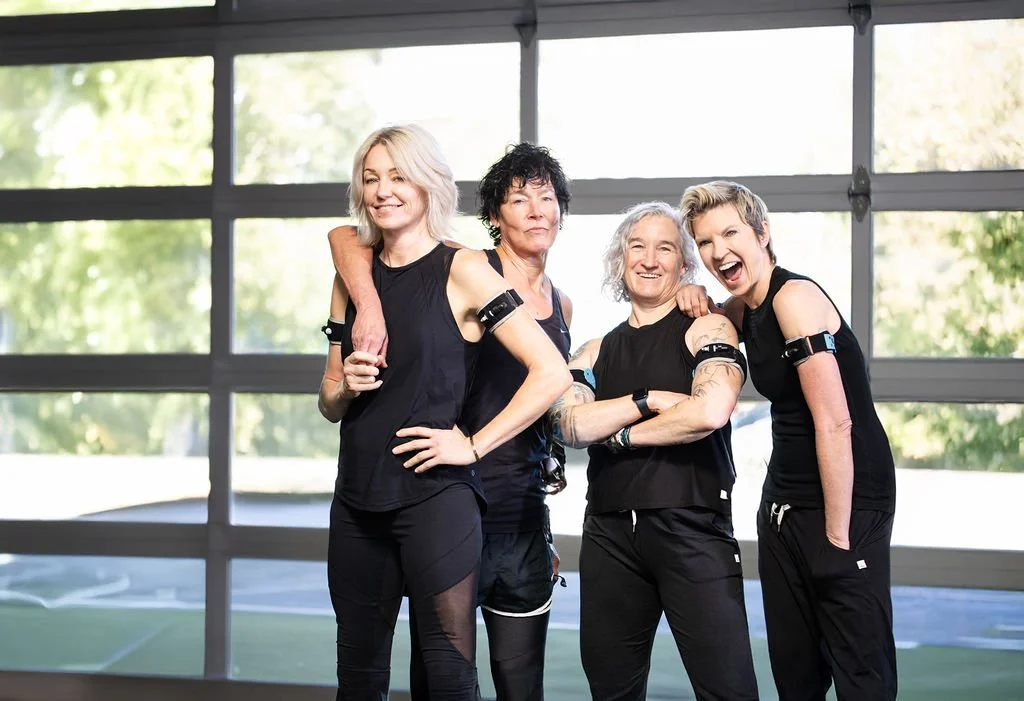
Why This Matters for Women in Midlife
Hormonal changes during perimenopause and menopause affect muscle retention, bone density, joint resilience, and recovery time. The training approaches that worked in your 30s may feel harder, take longer to recover from, or create pain that wasn’t there before. Most traditional programs aren’t designed with any of that in mind. Seli Strength is.
Strength training after menopause requires a method that creates real stimulus for muscle and bone without demanding the heavy lifting that strains aging joints. BFR creates that internal signal with lighter weights, protects joints, and lets the body adapt without the recovery debt that follows heavy training. Joint-friendly training that produces the right internal signal will always beat one that looks impressive but leaves you in pain. A workout you can show up for every week will always do more for you than one you need days to recover from.
How We Use BFR in Seli Strength
Seli Strength is a structured strength training program built entirely around BFR training. Every workout delivers what your body needs to build muscle and support bone density — with light weights, minimal equipment, from home.
-
3 strength workouts per week, approximately 20 minutes each
-
1 cardio workout per week when you’re ready to add it
-
Live Zoom and on-demand options
-
Designed and guided by Coach Seli — 30 years of expertise, built into every session
-
Light weights, exercise tubing, BFR bands, and body weight — that’s the equipment list
Ready to see if this works for you?
Try a 20-minute session and see how the method works.
*The sample workout can be completed without BFR bands and reflects the structure of the actual program. You’ll see them referenced in the video.